daily sprout
/your pocket plant for healthier beverage habits/
project summary
Over the course of ten weeks, I collaborated with a team of three to design and test Daily Sprout, a mobile app that helps users build healthier beverage habits through gamification. We conducted extensive user research including surveys, interviews, and diary studies, then designed and developed a functional app prototype. After a 10-day field study with 11 users, we identified key insights about motivation and engagement in health tracking apps.
project details
Project Type: Stanford CS 377U Project
Role: User Researcher, Mobile Developer
Dates: April 2025 - June 2025
Tools: Figma, React Native, Amplitude Analytics
Deliverables: Figma,
problem
People want to make healthier beverage choices, such as drinking more water, cutting back on caffeine and sugar, but they struggle to stay mindful in the moment. Traditional tracking apps feel tedious and don't stick. We found that beverage choices are deeply emotional and identity-driven, tied to comfort, social pressure, and cultural norms. Users want awareness without the burden of manual tracking.
How might we make tracking feel lightweight, motivating, and even fun?
solution
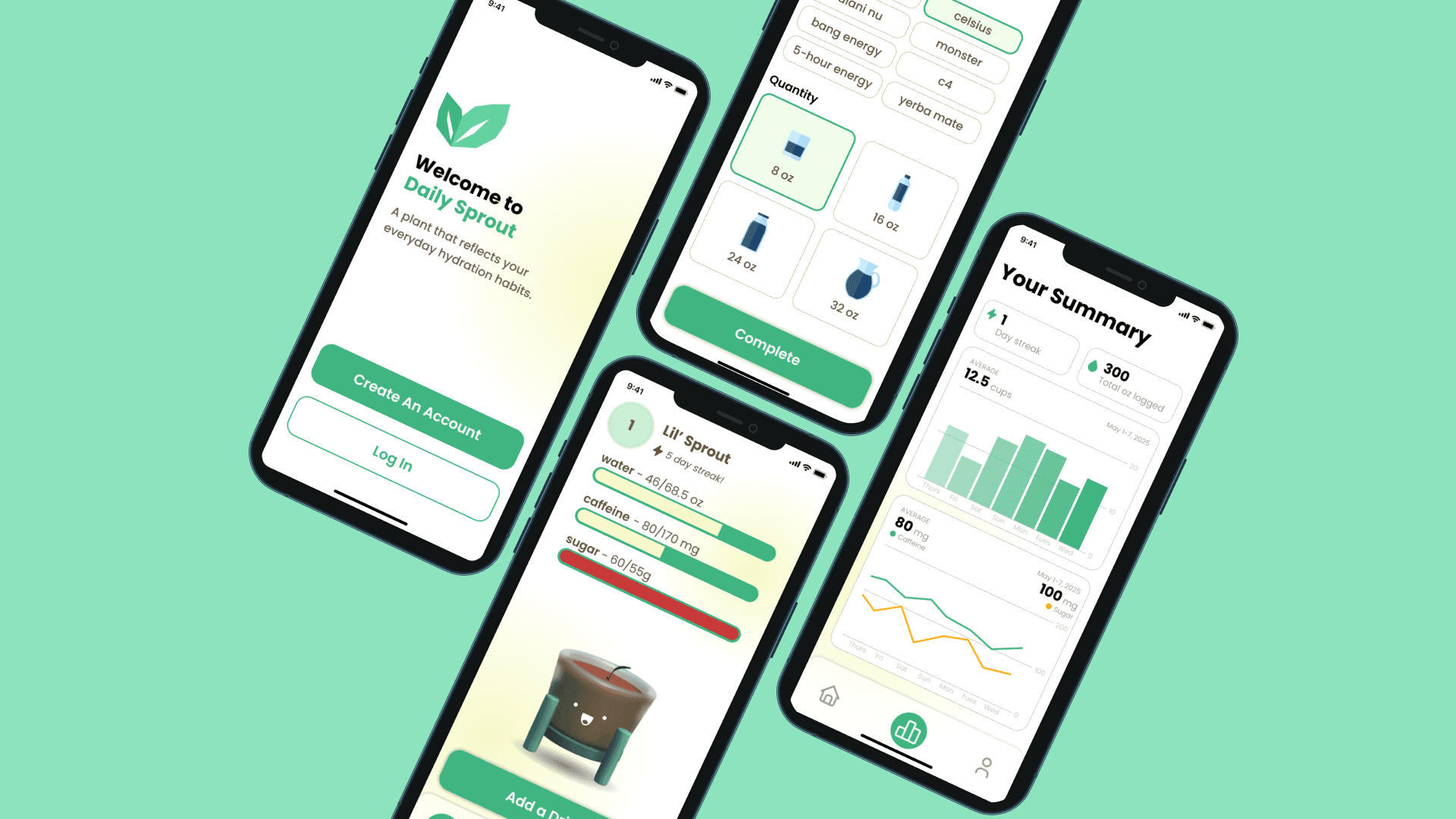
Daily Sprout transforms beverage tracking into something emotionally engaging: users can "water" a virtual plant each time they log a drink. Water makes it grow and smile; sugary or caffeinated drinks slow its growth. Users set personalized hydration goals and view weekly summaries to reflect on their habits. The combination of cute 3D visuals and practical tracking creates a lightweight, satisfying experience that makes users actually want to check in.
final product
process
based on the Stanford d.school design process
01 - empathize
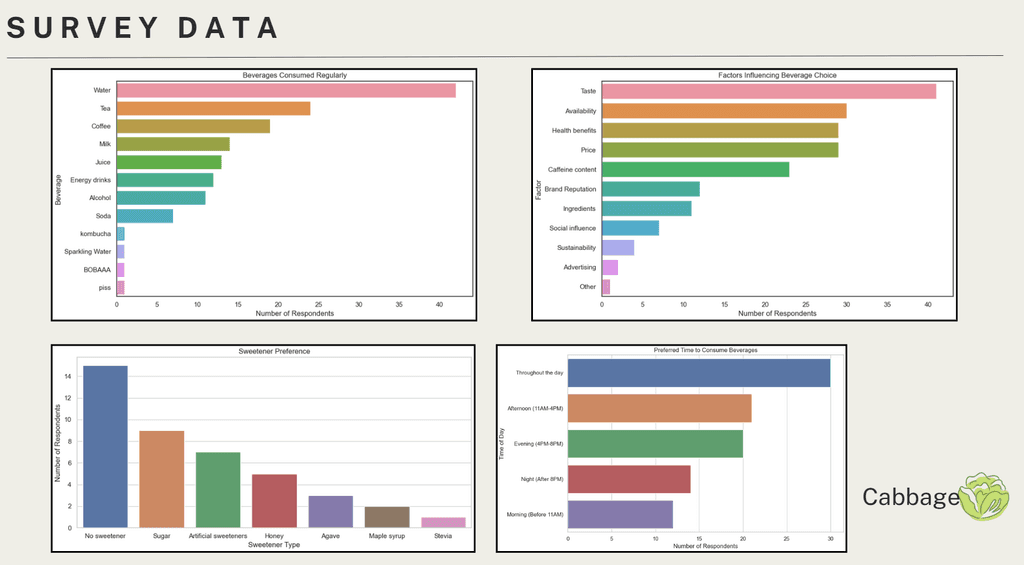
We conducted comprehensive generative research to understand user behaviors and pain points with a survey (n=42) to gauge interest in healthier beverage habits and current tracking behaviors; a diary study (n=6) to observe real-time beverage decisions over multiple days; then user interviews (n=6): to explore the emotional and cultural contexts behind drink choices.
Through this research, we uncovered powerful insights about why people struggle. One user said, "It's almost like an accessory. I love a bev"—revealing how drinks serve as identity markers, not just hydration. Another shared, "Every time I go to CoDa, I feel like I need to buy a drink," highlighting social and environmental triggers.
02 - define
We synthesized our findings into two key insights that shaped our design direction: beverage choices are emotional and identity-driven. Drinks aren't just functional—they're tied to comfort, social pressure, culture, and reward. People want awareness, but hate tracking. Users expressed a clear desire to change but lacked simple, satisfying tools to stay consistent. This led to our challenge: How might we make manual tracking feel more lightweight and emotionally engaging, so users actually want to reflect on their habits?
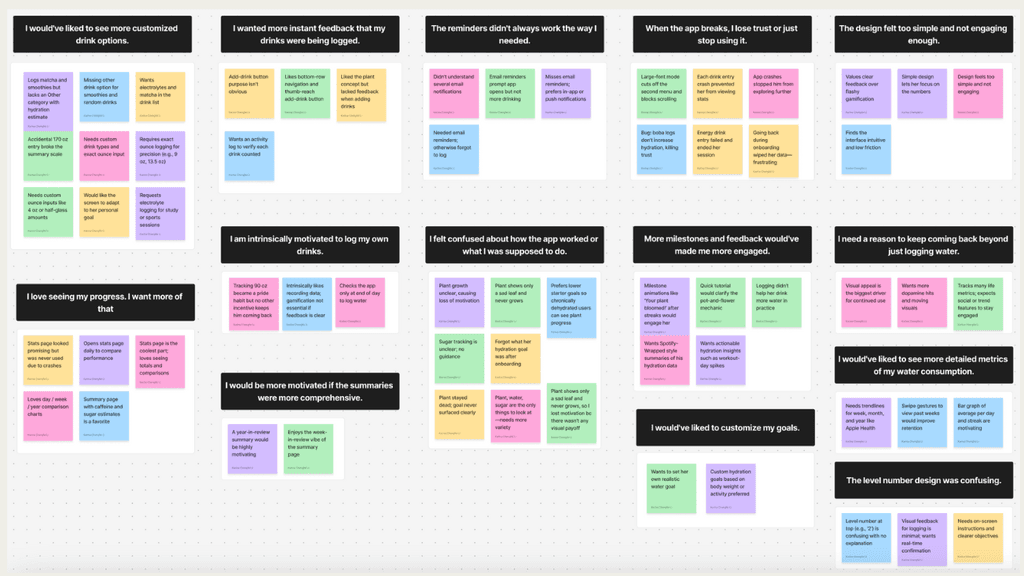
Compiled Empathy Map and Key Insights
03 - ideate
We explored various concepts, weighing cuteness against functionality. We landed on the plant metaphor because it offered: visual feedback that's instantly satisfying; a growth mechanic that mirrors habit-building; low cognitive load, where users can just tap and water; and an emotional connection users could build over time
04 - prototype
We created a low-fidelity prototype, using paper drawings imported into Figma, for testing. We then created a medium-fidelity prototype using Figma. Finally, as the mobile developer, I programmed the high-fidelity prototype using React Native TS.
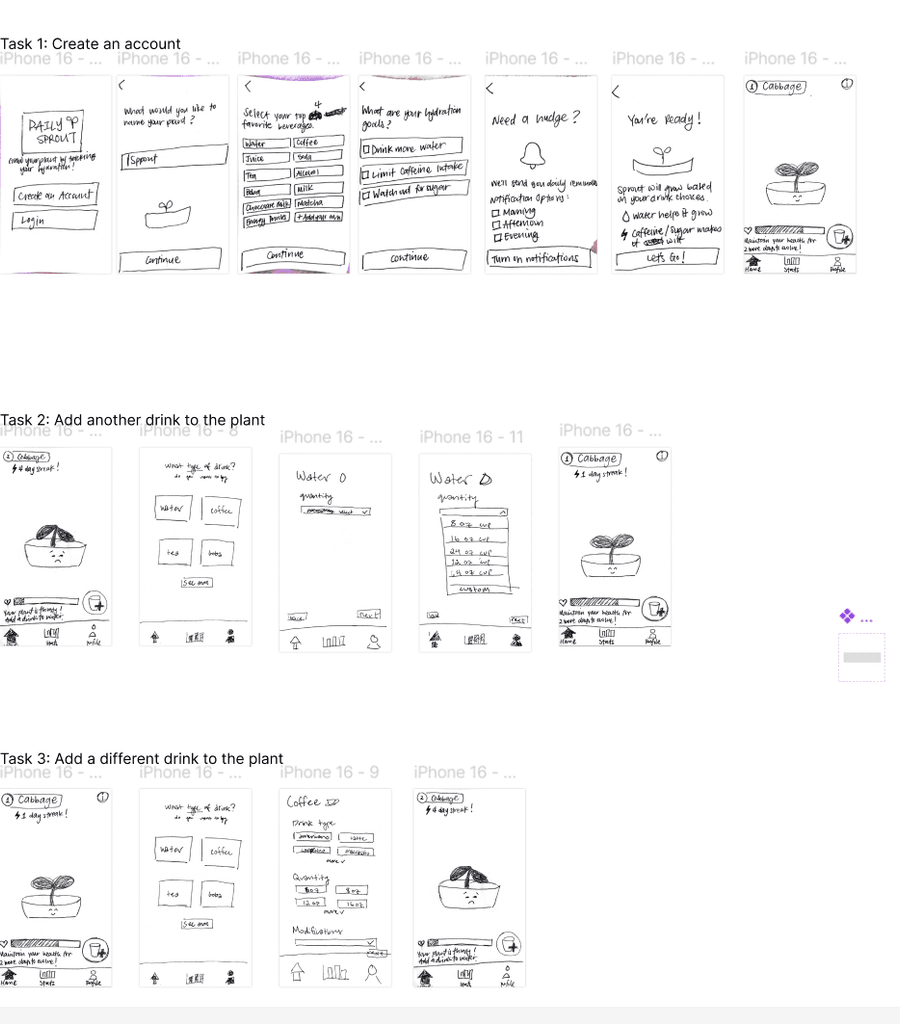
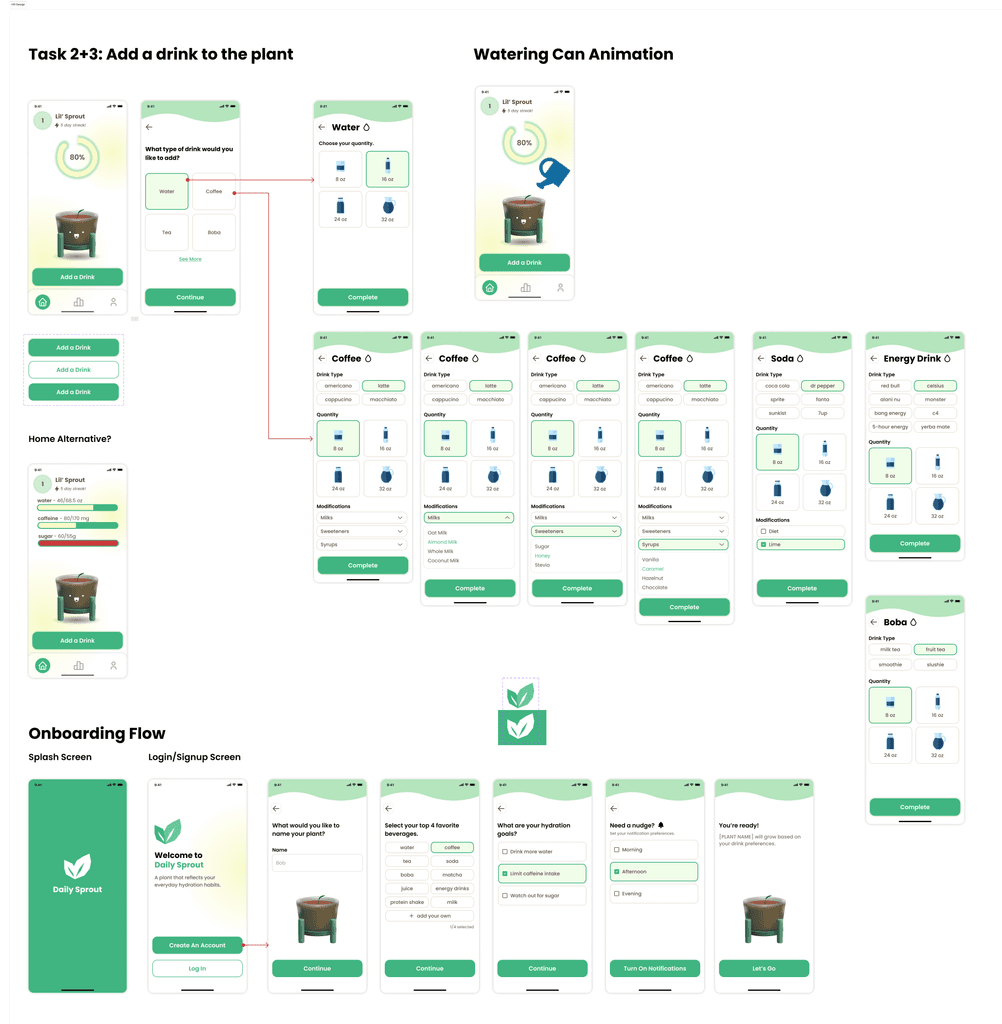
Low-Fidelity and Medium-Fidelity Prototypes
05 - test
We conducted a 10-day field study with 11 Gen Z college students who regularly drink water and caffeinated/sugary beverages. During this study, we conducted A/B testing to test the notification system: group A received more cheerful/fun notifications, while group B received serious notifications. We tracked behavior through Amplitude analytics and followed up with in-depth interviews (n=5), then synthesized findings through affinity mapping.
Plant Design
We initially started with a cute vector art style. However, we decided to go with a more modern approach to avoid "over-gamification."
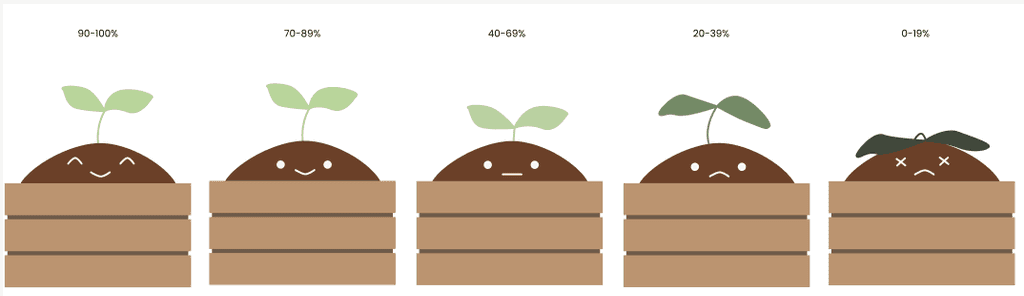
To complete our project within the short quarter timeframe, we opted to use a free plant 3D model made on Spline.3D (did not include the face). We designed a simple, minimalist face to represent the happiness of the plant: the more hydrated/less caffeinated/less sugar intake for a given day, the happier the plant (resets each day). We also planned to have different levels, represented by the flower growth to encourage long-term use.
However, after our 10-day field study, we found that the facial expressions actually deterred users, rather than encourage them. Users expressed that the threshold to get the plant to be smiling was too high. In the future, we would adjust the scale to allow for users to see a small smile at 50-69%.
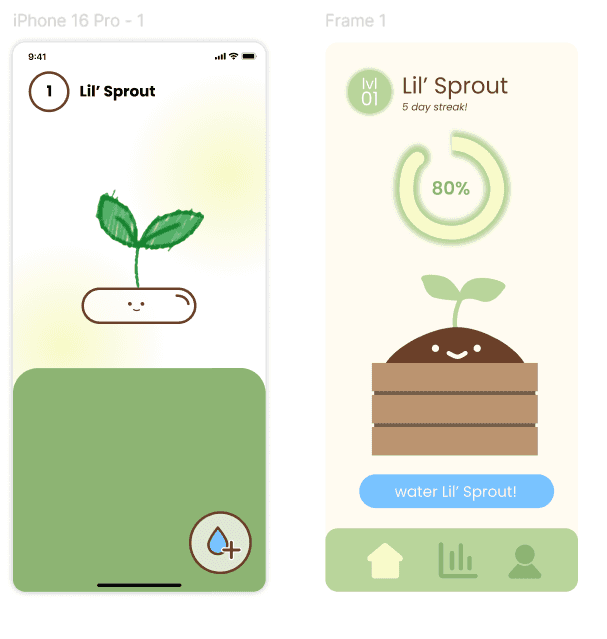
Initial Plant Design
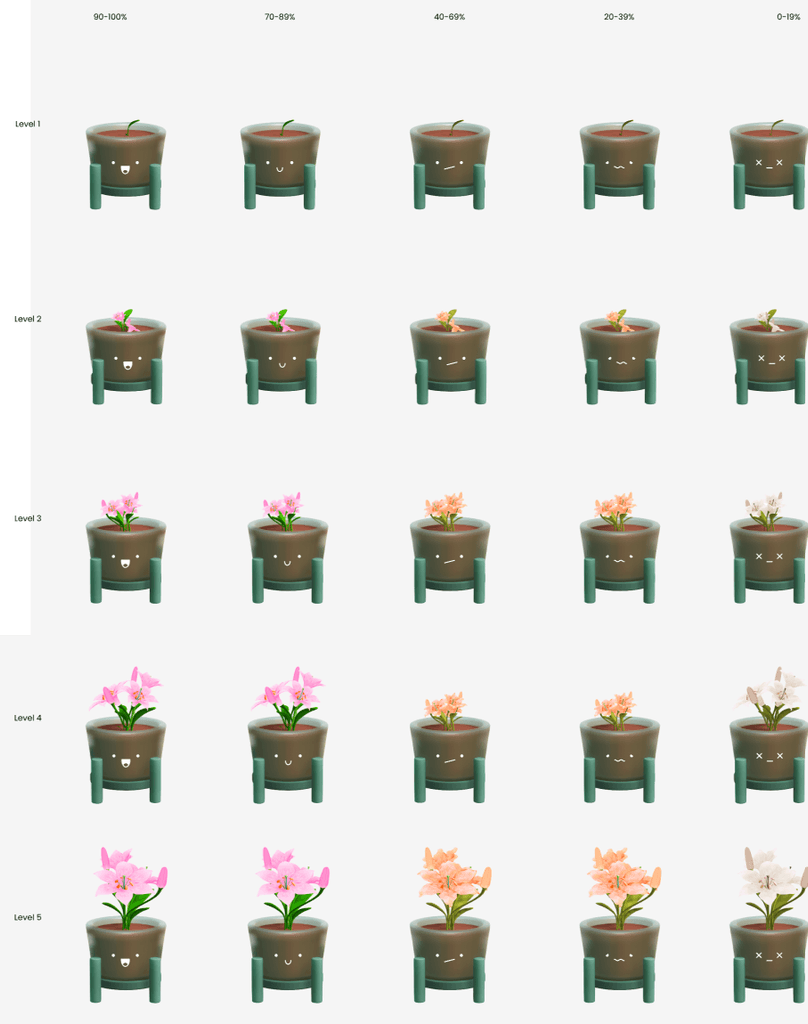
Final Plant Level + Percentage Design